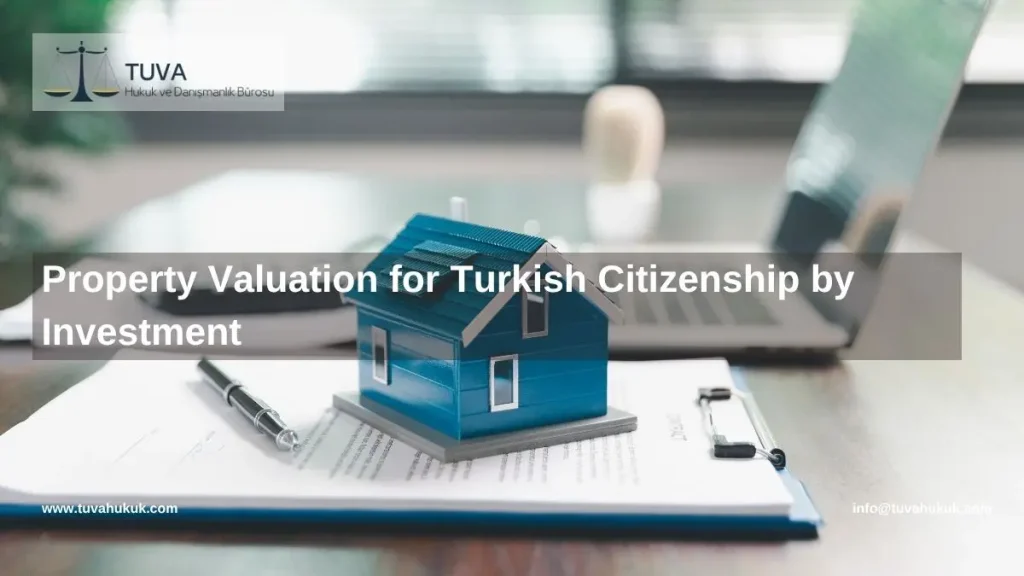
Property valuation is one of the most important parts of acquiring Turkish citizenship through real estate investment. Purchasing a property with a high advertised price does not necessarily mean that the property will satisfy the citizenship requirements. The value recognised during the official process, the amount declared in the title deed and the payment documents must all be considered together.
Foreign investors should therefore examine the valuation position before completing the purchase or transferring the full purchase price.
Under the current Turkish citizenship by investment framework, an investor may qualify by purchasing eligible real estate worth at least USD 400,000 or its equivalent in foreign currency, subject to a restriction preventing the property from being transferred for three years.
However, reaching the required investment amount is not determined solely by the price agreed between the buyer and seller. The transaction must also satisfy the applicable valuation, payment and registration requirements.
This guide explains how Turkish citizenship property valuation works, what the Tutar Tespit Belgesi means and which documents should be checked before completing an investment.
Why Is Property Valuation Important for Turkish Citizenship?
In an ordinary property transaction, the buyer and seller may negotiate a price based on commercial expectations. In a citizenship investment, however, the transaction is also reviewed to determine whether it satisfies the legal investment threshold.
An apartment may be advertised for USD 450,000, for example, while the value recognised for the citizenship process may be lower. Conversely, an investor may transfer USD 400,000 but declare a different amount in the title deed.
These discrepancies can affect whether the property qualifies for the citizenship procedure.
A valuation-related review helps determine:
- Whether the property satisfies the minimum investment threshold
- Whether the agreed sale price is commercially reasonable
- Whether the title deed value is consistent with the transaction
- Whether the payment documents correspond to the property purchase
- Whether there are legal or physical issues affecting the property’s value
- Whether the investment structure is suitable for a citizenship application
Investors should therefore complete the necessary checks before signing binding documents or transferring significant funds.
What Is the Tutar Tespit Belgesi?
For citizenship-related property transactions, the value assessment is documented through the Taşınmaz Edinim Sureti ile Vatandaşlık Kazanımına Esas Tutar Tespit Belgesi, generally referred to as the Tutar Tespit Belgesi or TTB.
The document is used to determine the value that can be taken into consideration for acquiring Turkish citizenship through real estate.
The TTB system replaced the previous valuation-report practice for relevant citizenship transactions from 9 December 2024. Applications are handled through the authorised land registry valuation system, rather than through an informal report commissioned directly from an appraiser selected by the seller.
A private valuation, estate agency estimate or seller’s statement cannot replace the valuation documentation required by the competent authorities.
What Is the Minimum Property Investment?
The minimum real estate investment for the Turkish citizenship programme is currently USD 400,000 or its equivalent in another foreign currency.
The investor must also undertake not to sell or otherwise transfer the qualifying property for at least three years. The restriction is recorded in the land registry.
The investment threshold should not be assessed only by looking at the advertised property price. The relevant figures in the official transaction and payment documentation must satisfy the applicable requirements.
For a detailed explanation of the wider acquisition process, investors can review our guide on how to buy property in Turkey for citizenship.
Which Values Must Meet the USD 400,000 Threshold?
One of the most important issues is the consistency of the different values used during the transaction.
Depending on the structure of the acquisition, the following amounts may be examined:
- The value stated in the Tutar Tespit Belgesi
- The sale price declared in the official title deed or preliminary sale contract
- The amount shown in the Foreign Currency Purchase Document
- The amount transferred through the banking system
Each required value must independently satisfy the applicable minimum investment amount. A higher value in one document will not necessarily correct a deficiency in another.
For example, if the buyer pays USD 420,000 but the value recognised in the TTB remains below USD 400,000, the payment amount alone may not make the property eligible. Similarly, a sufficient TTB value will not resolve a title deed declaration or documented payment that falls below the required threshold.
The documents should therefore be reviewed as a complete and consistent transaction file.
TTB Value and Sale Price Are Not the Same Thing
The sale price is the commercial amount agreed between the buyer and seller. The TTB value is the amount determined for the citizenship-related property transaction through the authorised valuation process.
The two values may be similar, but they are not automatically identical.
A seller may request a premium because of furniture, projected rental income, renovation work, payment terms or expected future development. Some of these commercial considerations may not increase the value recognised for citizenship purposes to the same extent.
The investor should therefore avoid relying exclusively on:
- The property listing price
- An estate agent’s estimate
- A developer’s price list
- A promised future value
- An unofficial appraisal
- The seller’s verbal assurance
The official valuation position should be verified before the investment is finalised.
How Is the Property Valuation Application Made?
The valuation process is generally initiated through the Web Tapu system and the authorised valuation infrastructure used by the General Directorate of Land Registry and Cadastre.
Information and documents concerning the property are submitted through the system. The authorised process then assigns the relevant valuation work.
The investor should ensure that the details submitted for valuation correspond with the property that will be acquired. Mistakes involving the block, parcel, independent unit number or property characteristics can cause delays or inconsistencies.
The exact procedure may depend on whether the transaction concerns:
- A completed and individually titled property
- A property subject to condominium easement
- A preliminary sale contract
- A newly constructed development
- Multiple properties acquired together
Legal review should take place alongside the valuation process because valuation does not replace due diligence concerning ownership and title status.
What Factors May Affect the Property’s Value?
The valuation of a property may be influenced by a range of legal, physical and market factors, including:
- Location and surrounding development
- Property type and permitted use
- Gross and net area
- Age and physical condition
- Floor and position within the building
- Construction quality
- Comparable property transactions
- Zoning and planning status
- Condominium or condominium-easement status
- Legal restrictions recorded against the property
- Whether the actual property corresponds with its approved project
Not every feature advertised by a seller will necessarily produce the same increase in the recognised value. Investors should be particularly careful when a property is sold significantly above comparable properties in the same location.
How Long Is the Tutar Tespit Belgesi Valid?
For Tutar Tespit Belgeleri issued under the system applicable from 9 December 2024, the validity period is generally six months.
Older valuation reports issued before that date were subject to the previous three-month validity period.
The title deed transaction and related citizenship procedures should be planned with this period in mind. If the transaction is delayed, the document may expire before it can be used and a new valuation process may become necessary.
Investors should also check whether any changes to the property or transaction have occurred since the document was issued.
What Happens If the Valuation Is Below USD 400,000?
If the amount recognised for the property does not satisfy the minimum threshold, declaring a higher purchase price will not necessarily solve the problem.
The investor should not assume that the following expenses can be added to the property value:
- Estate agency commission
- Legal fees
- Title deed charges
- Taxes
- Valuation expenses
- Furniture packages
- General administrative costs
- Citizenship application expenses
If the valuation is insufficient, the proposed transaction should be reconsidered before completion. Depending on the circumstances, possible alternatives may include acquiring an additional eligible property or selecting a different property whose documented value satisfies the requirement.
Any restructuring should be completed with legal and financial coordination. A solution that appears mathematically sufficient may still fail if the payments, documents and title deed registrations do not comply with the applicable procedure.
Can More Than One Property Be Used?
It may be possible to use more than one property to reach the investment threshold, provided that the acquisition and application are structured in accordance with the applicable rules.
Each property must be examined separately. The investor should check:
- The valuation documentation for each property
- The seller and ownership details
- The payment made for each acquisition
- The amount declared in each title deed transaction
- The eligibility of each property
- The registration of the required three-year restriction
The combined investment should be coordinated as a single citizenship strategy. Purchasing several properties without planning the sequence, documentation and payments can create avoidable complications.
Valuation of Off-Plan and Newly Constructed Properties
Off-plan and newly constructed properties require additional care because the property’s legal and physical status may differ from a completed apartment with an individual title deed.
Before investing, the buyer should verify:
- The developer’s title and authority to sell
- Construction and zoning documentation
- The legal status of the independent unit
- Whether a preliminary sale contract will be used
- Whether the contract can be properly registered or annotated
- The value that can be recognised under the applicable TTB process
- The payment schedule and supporting bank records
- The expected title transfer procedure
A developer’s projected completion value should not automatically be treated as the value that will be accepted for citizenship purposes.
The Relationship Between TTB, DAB and Bank Payments
Property valuation is only one component of the citizenship investment file.
A typical transaction may also involve a Döviz Alım Belgesi, commonly translated as a Foreign Currency Purchase Document. This records the sale of foreign currency to the relevant bank as part of the regulated property acquisition process.
The bank transfer documents should clearly establish:
- The identity of the payer
- The identity of the recipient
- The amount paid
- The currency used
- The date of payment
- The connection between the payment and the property transaction
Cash payments, unclear transfers or payments involving unrelated third parties can make the source and purpose of funds more difficult to establish.
The TTB, title deed declaration, Foreign Currency Purchase Document and banking records should be checked together before the title deed transaction.
Valuation Does Not Replace Legal Due Diligence
A property may have a sufficient value but still be an unsuitable investment.
The valuation process does not by itself confirm that:
- The seller has unrestricted authority to sell
- The property is free from mortgages or attachments
- The building fully complies with its approved project
- There are no zoning or occupancy problems
- The sale contract protects the buyer
- The property has strong rental or resale potential
- The citizenship application will be approved
A separate title deed and legal due-diligence review should be completed before the investor becomes contractually committed.
You can find an overview of the wider programme on our Turkish citizenship by investment page.
Risks of Inflated Property Valuations
Investors should be cautious if a seller or intermediary promises that a property will receive a predetermined valuation regardless of its actual characteristics.
Warning signs may include:
- A price substantially higher than comparable properties
- A guaranteed valuation offered before official examination
- A request to return part of the purchase price after completion
- Payments requested outside the banking system
- Different prices appearing in separate documents
- Pressure to sign or transfer funds before legal review
- A suggestion that official requirements can be bypassed
Artificially inflated transactions can create legal, financial and administrative risks. They may also leave the investor with a property whose real market value is significantly below the purchase price.
Common Property Valuation Mistakes
The most common mistakes include:
- Assuming the advertised price is sufficient
- Paying before checking the valuation position
- Declaring a lower amount in the title deed
- Allowing inconsistencies between the payment and sale documents
- Treating taxes or expenses as part of the property value
- Relying on an unofficial appraisal
- Using incomplete payment descriptions
- Failing to consider the TTB validity period
- Confusing citizenship eligibility with investment quality
- Skipping legal due diligence because the developer is well known
These risks can often be reduced by reviewing the property, valuation and payment structure before the transaction becomes binding.
Frequently Asked Questions
Can the seller’s price override a lower TTB value?
No. A seller may agree to sell a property for more than USD 400,000, but this does not automatically mean that the property satisfies the citizenship valuation requirement. The relevant official values must meet the applicable threshold.
Do taxes, commissions and legal fees count toward the investment amount?
Ordinary transaction expenses should not be treated as part of the qualifying property value. The investment should satisfy the required threshold independently of taxes, commissions and professional fees.
Can the buyer choose an appraiser directly?
The citizenship-related valuation process must proceed through the authorised system. An appraisal privately commissioned from a person selected by the buyer, seller or estate agent does not replace the required official documentation.
How long is the TTB valid?
A Tutar Tespit Belgesi issued under the current system is generally valid for six months. The timing of the title deed and related procedures should be coordinated accordingly.
Does a sufficient valuation guarantee citizenship?
No. Property valuation is only one part of the process. The property, investor, payment documents and application must satisfy all applicable legal and administrative requirements. Citizenship remains subject to review and approval by the competent authorities.
Legal Assistance with Citizenship Property Valuation
A carefully planned valuation and payment process can help prevent inconsistencies that may affect a Turkish citizenship application.
Tuva Hukuk assists foreign investors with property due diligence, citizenship investment planning, title deed procedures, payment-document review and application coordination.
Before signing a purchase agreement or transferring funds, investors may contact a Turkish citizenship lawyer for advice tailored to the proposed transaction.
This article is provided for general information only and does not constitute legal advice. Turkish citizenship and property acquisition rules may change, and each transaction should be reviewed according to its specific circumstances.